Most communities judge themselves not by how fast they move, but by how well they treat the people who move the slowest. That’s why something that happened recently at the Greer County Health Department caught my attention.
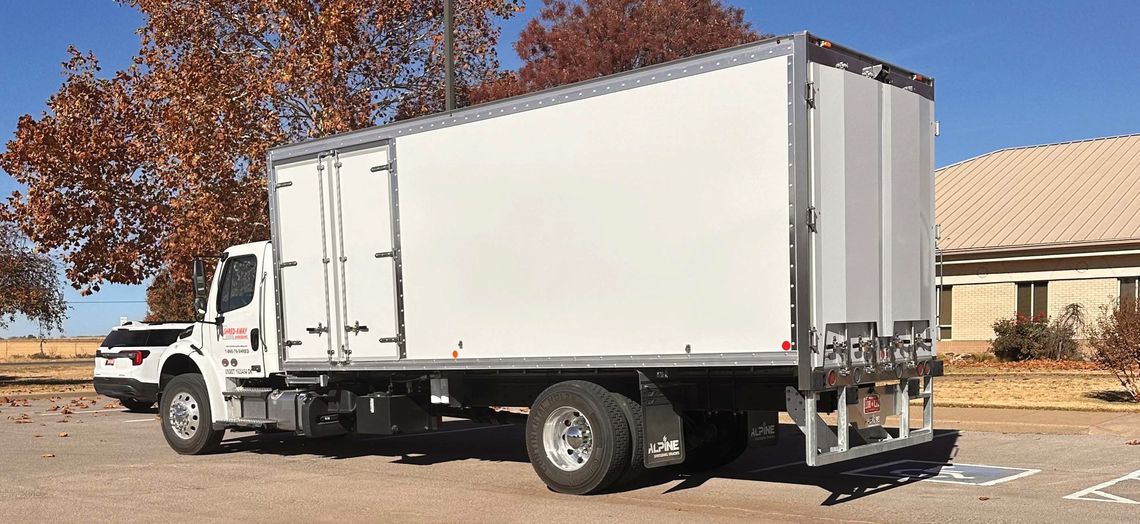
On an otherwise quiet morning, a ShredAway box truck pulled into the parking lot and stopped across the row of designated disabled parking spaces, its rear end covering the access aisle and part of a marked ADA spot. The rest of the lot sat so empty you could’ve hosted a church potluck out there — and still had room for a parade.
It wasn’t dramatic or malicious. It was simply convenient. And like a lot of things in today’s culture, convenience seems to be winning more battles than courtesy.
Under Oklahoma Statute 47 O.S. §111007, parking in a disabled space or its access aisle is unlawful — no exceptions for unloading, short stops, or being “just a minute.” Those striped aisles aren’t decorations. They’re there because people using wheelchairs, walkers, or mobility ramps need the room.
Wanting to understand the situation better, I emailed the contact address listed on ShredAway’s website. The driver, Beau Meshell, responded promptly and respectfully: “I pull up front because we shred secure documents that are important for the customer to see being shredded. I had the back end of my truck in one spot, I do admit, but there were four open handicaps right beside the spot my tail end was in… I take at most about 10 minutes at each stop. I’m sorry I affected your day.”
His explanation was courteous, but one detail stood out: there aren’t four handicapped spaces at the Greer County Health Department. There are two.
Whether it was a simple miscount or a way of making the situation seem smaller, it highlighted something all too human — how easily we minimize the inconvenience we cause when we’re the ones who benefit from it.
And to be fair, I understand that instinct because I’ve done it too. I’ve parked “just a second” where I shouldn’t have. I’ve convinced myself it wouldn’t hurt anything. Most of us have. Convenience is built into modern life.
Still wanting to know whether this refl ected personal habit or company policy, I called ShredAway’s 1-800 line for clarifi cation. The person who answered reacted with immediate irritation — mocking, raising his voice, and cussing when asked about ADA access. When I requested his name for attribution, he refused. At that point, I chose to end the call. (If customer service had a weather alert system, this call would’ve come with a “High Wind Advisory.”) What both conversations revealed wasn’t a villain or a scandal. It was something far more common — and far more familiar: the way we all tend to downplay our own impact when we’re in a hurry.
“It was only a minute.” “There were other spots.” “It didn’t hurt anything.” Those lines roll off the tongue easily when the problem isn’t ours.
The bigger issue has nothing to do with one truck or one company. It’s the cultural drift we’re all feeling.
Fire lanes. Crosswalks. Loading zones. ADA access aisles.
Spaces meant to protect the most vulnerable among us are increasingly treated as optional if someone believes they’ll “be right back.”
Some say it’s the pace of life. Some say it’s the political climate. Some say it’s the rise of a me-first mindset, where everyone is the star of their own show.
Whatever the cause, moments like this remind us how quickly shared courtesies can erode if we’re not paying attention.
This story isn’t really about ShredAway or Mangum or a single Tuesday morning. It’s about us — our habits, our shortcuts, our tendency to minimize, and our ability to do better.
Maybe the real question isn’t why a truck blocked an ADA space. Maybe it’s how we rebuild a culture where it wouldn’t even cross someone’s mind to do it — and where asking a reasonable question is met with respect instead of hostility.
And maybe it starts with acknowledging — with a little humor and humility — that we’ve all chosen convenience over courtesy more times than we’d like to admit.