
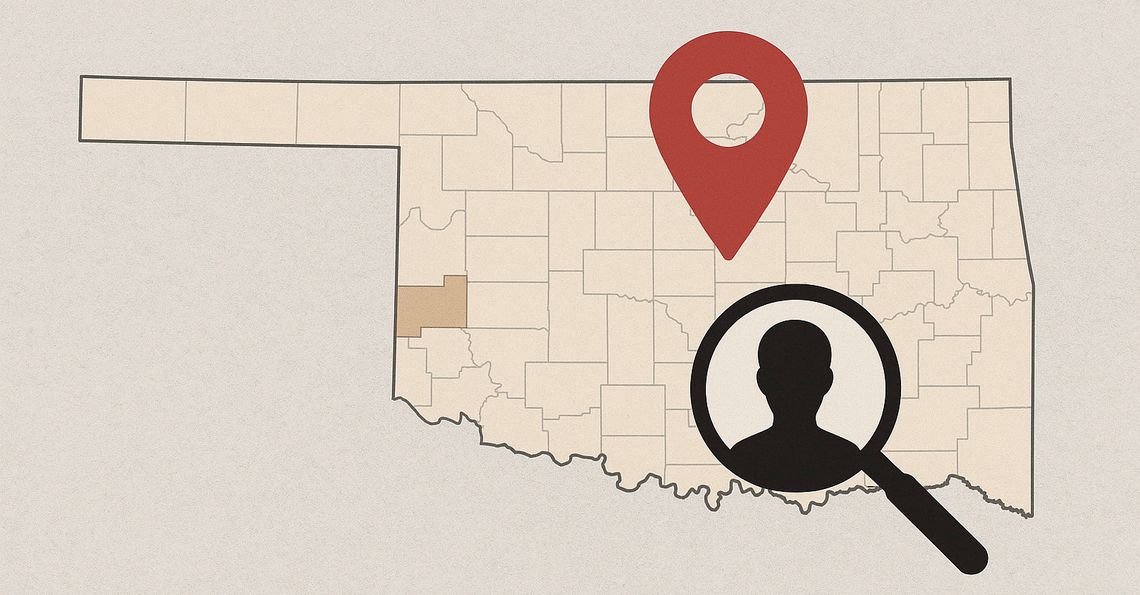
The recent Elk City arrest involving a registered offender attempting to meet an underage decoy has renewed concern about the accuracy of Oklahoma’s sex offender registry. While the registry is a vital public-safety resource, it is not designed to track offenders in real time.
Under the Oklahoma Sex Offenders Registration Act (OSORA), offenders must report their address and notify authorities when they move. Verification is based on risk level: once a year for Level 1, every six months for Level 2, and every 90 days for Level 3. During these intervals, an offender may relocate, and the online registry may temporarily show an outdated address, even if the individual is still within the legal reporting window.
Law enforcement verifies reported addresses through non-forwardable mail and in-person reporting. If an offender fails to respond or misses a deadline, officers investigate, and a warrant may be issued. Delays can occur because the system relies heavily on self-reporting, mailing timelines, and the housing instability many registrants face. These factors can result in short gaps between an offender moving and the registry being updated.
The registry reflects the most recent information provided by the offender; it is not intended to guarantee daily accuracy. Temporary discrepancies do not necessarily indicate negligence but are a known limitation of the registration model used nationwide.
A request for comment was sent to the Sheriff’s Office regarding local verification practices and enforcement procedures, but no response was received by press time.