
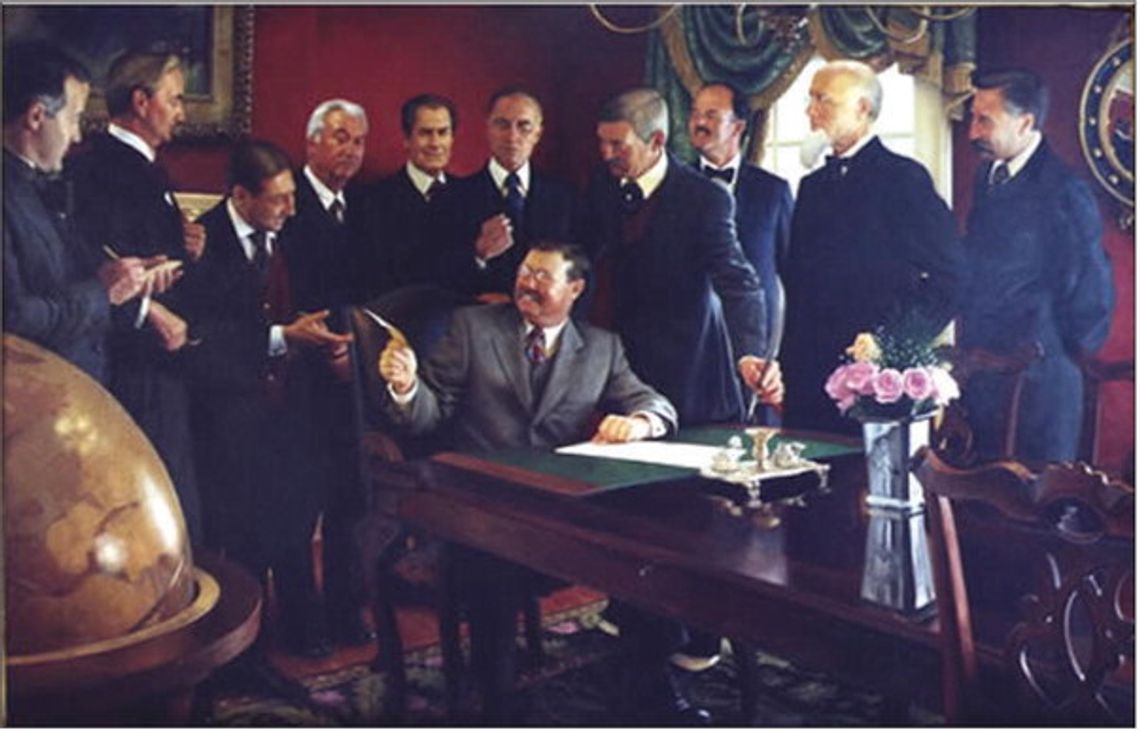
Journey to Becoming the 46th State
On February 1, 1907, Oklahoma officially became the 46th state in the Union. This momentous event, which capped a long and turbulent journey, marked the end of Oklahoma’s transition from Indian Territory to statehood. The path to statehood was shaped by Native American displacement, the Oklahoma Land Rush, and the political struggles of settlers and tribes. Today, Oklahoma’s history remains defined by this unique blend of cultures and challenges.
Before becoming a state, Oklahoma was designated as Indian Territory, a land set aside for Native American tribes forcibly relocated from their homelands in the 1830s. The tragic removal, known as the Trail of Tears, devastated many tribes, including the Cherokee, Chickasaw, Choctaw, Creek, and Seminole. By the late 1800s, these tribes had rebuilt their societies in Indian Territory, but the discovery of new land opportunities began to pull settlers westward.
In 1889, the Oklahoma Land Rush drew thousands of eager settlers hoping to claim land that had once been reserved for Native Americans. The excitement surrounding the Land Rush signaled the beginning of the end for Indian Territory, as more and more settlers demanded statehood.
Although settlers flooded in, Indian Territory remained a political and cultural mosaic of tribal nations. Statehood seemed like a distant dream until the Oklahoma Enabling Act of 1906 was passed, which allowed for the creation of a state government and gave settlers a chance to vote on statehood.
A constitutional convention convened in 1906 to draft a state constitution. After heated debates and compromises between settler interests and Native American land concerns, the Oklahoma constitution was approved. It became a unique document, blending Progressive ideals with a recognition of tribal lands, a key factor in gaining broader support for statehood.
On February 1, 1907, President Theodore Roosevelt signed the proclamation admitting Oklahoma as the 46th state of the United States. The moment was a victory for settlers who had long campaigned for statehood. Yet, for Native American tribes, it was the beginning of a new struggle, as the creation of the state meant the erosion of their sovereignty and traditional landholdings.
Charles N. Haskell, Oklahoma’s first governor, played a crucial role in the transition, leading the state through its early years and ensuring its smooth entry into the Union.
While statehood brought significant economic opportunities, Oklahoma’s early years were not without challenges. The discovery of oil in the 1920s transformed Oklahoma’s economy, ushering in a boom that brought wealth and development. However, Native American tribes faced increasing pressure as their land was divided and sold off to settlers, and the policies of the new state further diminished their influence.
Despite these growing pains, Oklahoma’s economy flourished in the 20th century, spurred by its oil industry and agricultural output. The state’s rapid growth and wealth would later establish it as a key player in America’s economic landscape.
Oklahoma’s path to statehood left a complex legacy that continues to shape the state today. Its rich Native American heritage and history of settler expansion form the foundation of Oklahoma’s unique cultural identity. The state’s mix of traditions, struggles, and successes is woven into its modern identity, influencing everything from politics to art and music.
Oklahoma’s journey to statehood was far from straightforward. It was a story marked by the convergence of Native American history, settler ambitions, and the forces of American expansion. Yet through compromise, confl ict, and resilience, Oklahoma became the 46th state, and its legacy remains one of adaptation and strength.